Apostille of Birth Certificate and NABC in India
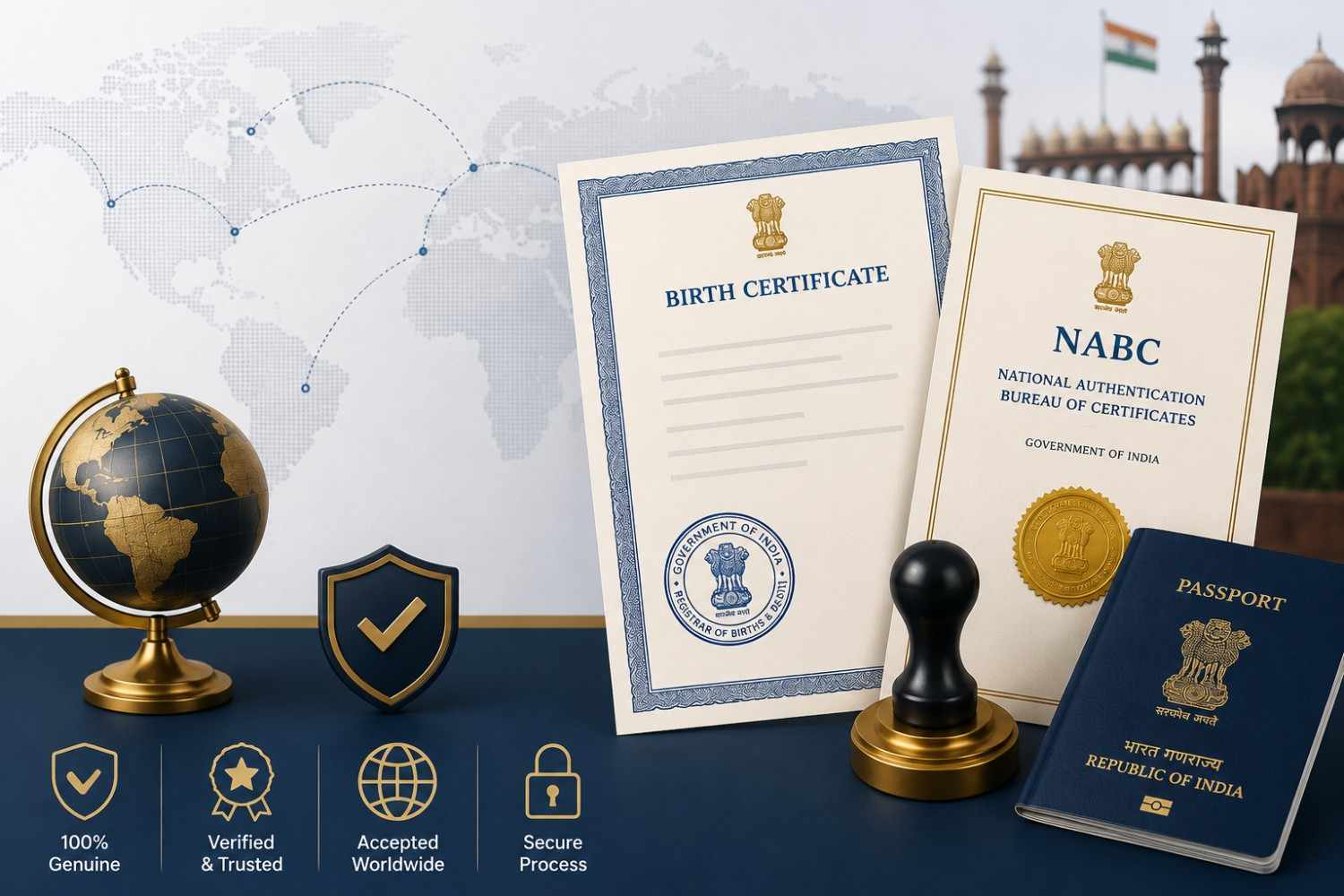
It is common for individuals these days to migrate to another country for various reasons such as employment, education, marriage, or business prospects, which requires completion and submission of variety of documents to the appropriate authorities.
One of the most commonly required personal documents in such cases is a Birth Certificate (valid in cases where birth is registered) and NABC (in cases where birth is not registered). However, when any personal document is to be submitted in a foreign jurisdiction, the same is required to be “apostilled” from India without which the certificate may not be accepted overseas.
Apostillization further certifies the genuineness and authenticity of the signature, seal, and legal capacity in which the public official has issued the document. Once apostilled, the document is generally accepted in all countries that are signatories to the Hague Convention without requiring any further embassy legalization.
What is an Apostille?
An Apostille is a form of certification issued under the Hague Convention of 5 October 1961, which abolished the requirement of diplomatic or consular legalization of public documents among member countries. India became a party to the Hague Apostille Convention in 2005. Therefore, an apostille generally consists of:-
-
The apostille seal/stamp of the Ministry of External Affairs with a unique identification number (UIN), certified by the Section Officer, MEA.
-
The seal/stamp of the Home Department.
-
Seal/Stamp of the Notary Public.
Once a document has been apostilled in the country of origin, it becomes valid and acceptable in all Apostille Convention member countries, without any need for further diplomatic or consular legalization. However, it is important to note that the validity of an apostilled document also depends on the accepting country's own requirements. It is hence prudent to always verify with the requirements from the foreign authority where the certificate is to be used.
Why is Apostille of a Birth Certificate or NABC Required?
Foreign authorities often require proof of birth and parentage in an authenticated form before processing migration applications.
A birth certificate is an official document issued by the government authority that records the birth of an individual. It serves as a legal proof that the birth of the said individual took place in the specified city, and hence acts as a proof of identity, age, nationality, and parentage. A birth certificate confirms that the birth was registered and therefore plays a vital role in documents required for compliance during migration to another country.
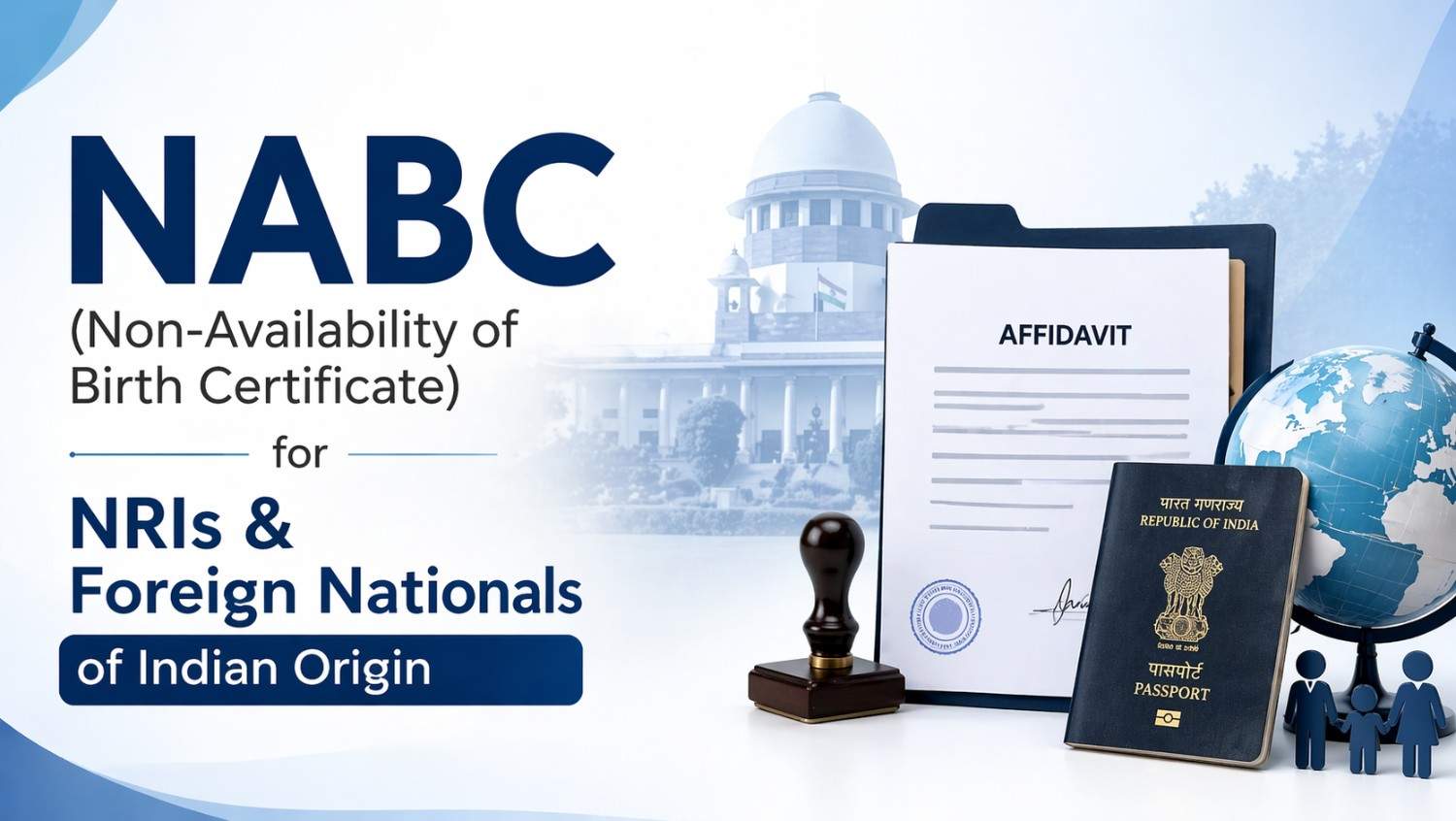
Non Availability of Birth Certificate (NABC) on the other hand is a document which is issued by the municipal authorities or the registrar of births and deaths when the birth of any individual took place in their jurisdiction, however, no record of birth is found in their register.
Both Birth Certificate and a Non- Availability of Birth Certificate (NABC) play a vital role and should be apostilled from India, in order to be used in the foreign country as a proof of birth, nationality and parentage.
How can NRIs get their Birth Certificate or NABC apostilled from India, Without Being Present Physically?
NRIs or foreign nationals of Indian origin can seek assistance in India, avail apostille attestation services as the task can be carried out even remotely. The documents can be submitted by an authorised representative along with the following documents-
-
Original Birth Certificate or original Availability of Birth Certificate (NABC) as the case may be, issued by the competent authority.
-
Copy of the applicant's passport and OCI, if applicable.
-
Proof of authorisation.
The birth certificate/NABC should be clear, legible, and should bear all the details correctly.
Once the documents are submitted, the process generally takes 6-10 working days to conclude.
Procedure for Apostille of Birth Certificate or NABC in India
Step 1: Get a Valid Birth Certificate/NABC issued from the competent authority
The applicant seeking the apostille attestation must possess a valid original birth certificate or NABC duly issued by the concerned authority which could be the Registrar of Births and Deaths, Municipal Corporation, Municipal Council, Gram Panchayat, or such other competent authority as the case may be. The Birth Certificate or NABC should be in a sound condition, and all details should be correct and legible. A xerox copy or a scanned copy will not be accepted. If the original document is damaged, lost or mutilated, a fresh copy should be obtained before initiating the apostille process.
Step 2: State-Level Authentication
A birth certificate or an NABC is a personal document, and hence the same should first be authorised and authenticated by the State Level Authority, for certificate attestation in Delhi and other states, which can be done either by-
The State authority verifies the authenticity of the birth certificate and endorses it for further processing.
Step 3: Apostille by the Ministry of External Affairs (MEA)
Once the Birth Certificate or NABC is pre-verified by the State Authority, it is then submitted to the MEA for apostille in Delhi. The Ministry of External Affairs (MEA) affixes-
-
A computer-generated Apostille sticker with a Unique Identification Number (UIN)
-
A QR code that can be verified online by foreign authorities. This constitutes the final apostille attestation of the document.
The Apostille itself includes details such as the issuing authority, document type, and official signature. This certificate confirms the authenticity of the document and enables its acceptance in Hague Convention countries.
Countries Where Apostille is Accepted
An apostilled birth certificate is generally accepted in all countries that are members of the Hague Apostille Convention. Countries that are not signatories may require consular legalization or embassy attestation instead of apostille.
Therefore, it is important that the applicants verify the specific requirements of the destination country before commencing the process.
Conclusion
Apostille of a birth certificate or an NABC is a vital requirement for individuals who wish to migrate to another country or use their birth records for foreign purposes be it immigration, employment, education, marriage, or application for citizenship. Seeking professional help ensures that the apostille formalities are concluded error-free and well within the stipulated time frame. Understanding the steps, requirements, and legal framework can help individuals and entities avoid delays, and ensure compliance with foreign regulations.