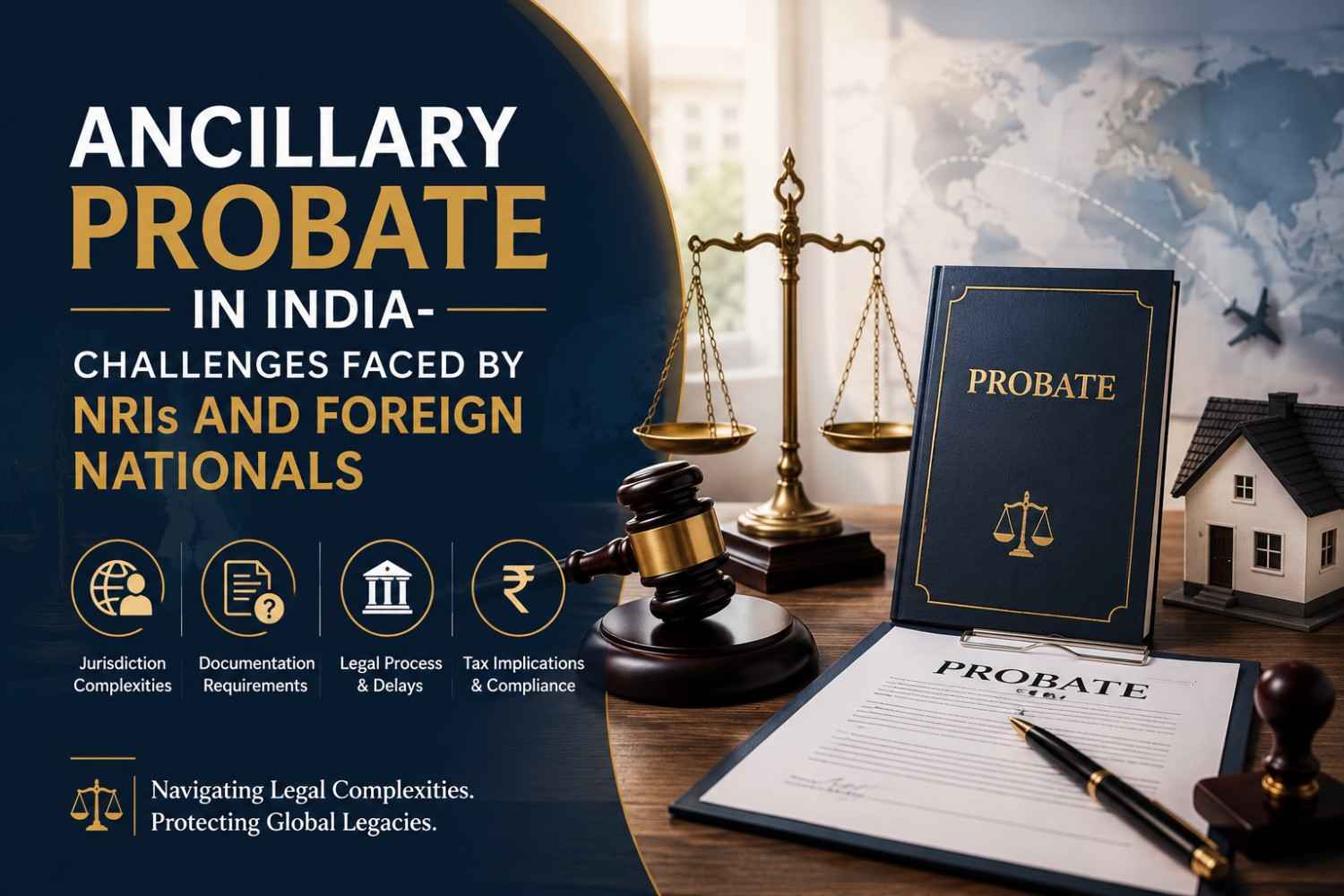
Probate is the process wherein the genuineness or veracity of the Will is legally confirmed by the judicial authorities. A Probate of will is the legal process through which a competent court certifies that a Will is genuine and valid, thereby authorizing the executor to administer the estate of the deceased in accordance with the wishes expressed in the Will by the deceased testator. The court order confirms that the Will was validly executed by the testator, in a sound mind, without any force, coercion or undue influence and that the executor named is authorised to administer the estate. In India, probate of will proceedings are primarily governed by the Indian Succession Act, 1925 and procedural aspects are regulated by the Code of Civil Procedure, 1908. In India, probate of will is either filed in the jurisdiction where- • The deceased testator ordinarily resided at the time of death; or • Where property is situated.
When is Probate Required
Probate process is mandatory only in specific jurisdictions in India, however, there may be certain authorities, that may necessarily ask for a probate in order to release the assets of the deceased or transfer the assets in the name of the beneficiaries. However, in jurisdictions such as Mumbai, Chennai and Kolkata, obtaining probate of a Will in mandatory and cannot be done away with. It is advisable to apply for probate where there is a pre-existing dispute between the legal heirs, title of the property is vague or questionable, etc.
Difference between Probate, Letters of Administration and Succession Certificate
S.No
Basis of distinction
Probate
Letters of Administration
Succession Certificate
1.
Meaning
Probate of Will is a process of authentication/confirming the genuineness of will by the competent court of law
Authority granted by court to administer estate when no executor is appointed or executor cannot act
Certificate issued to collect debts and securities of deceased
2.
Governing law
Indian Succession Act, 1925
Indian Succession Act, 1925
Indian Succession Act, 1925
3.
Applicability
When there is a valid Will in place and an executor is named to administer the estate
Where a Will exists but no executor is named, OR the executor refuses/dies,
When person dies intestate and legal heirs need authority to collect debts/securities
4.
Nature of Estate
Both Movable & Immovable assets
Only immovable assets or both Movable and Immovable assets
Generally applied only in cases of Movable assets
5.
Applied by
Executor of the Will or the beneficiaries
Legal Heirs
Legal Heirs
Who can apply for Probate ?
The following persons may apply for Probate-
The Executor named in the Will.
Legal heirs of the deceased testator
Generally required documents for filing a Probate application?
Original Probate of Will.
Death Certificate of the deceased testator.
Legal Heir Certificate iterating the legal heirs of the deceased.
Identity proof of testator, executor and legal heirs.
Details of assets and its valuation.
Procedure for Probate of will
The petition iterating the facts of the case along with the necessary details such as date of death of testator, contents of the last Will, details of legal heirs and beneficiaries, schedule of properties, Valuation of estate etc. is filed before the court of competent jurisdiction in the specific format, specific to each state. Including cases where the question arises as to is probate necessary for a registered will.
The court after examining the petition issues notice to the legal heirs along with a citation to general public through newspaper publication, if required to invite objections.
If the contents of the Will or its genuineness is challenged by any heir or third party, then evidence is led in order to ascertain its veracity and due execution of Will.
Once the court is satisfied, the court grants probate after payment of court fees, which is calculated based on the valuation of the estate.
Grounds on which a Will can be challenged.
A Will may be challenged on the following grounds-
Undue influence or coercion inflicted upon the testator while executing the Will.
Misrepresentation.
Forged Signatures.
Improper execution such as the witnesses never saw the testator sign the Will, the execution didn’t take place in front of the witnesses etc.
Conclusion
Probate of will is an impertinent process and crucial in legally enforcing the wishes of the deceased testator. Although probate is mandatory only in specific jurisdictions, obtaining the court order provides clarity of title and reduces future litigation risks. Timely initiation of probate proceedings, proper drafting of the Will, and ensuring compliance with statutory formalities go a long way in preventing contentious disputes.
Frequently Asked Questions
Probate of will in India can be obtained by approaching the court of competent jurisdiction and filing the application for grant of probate. This is generally applied by the executor under the will or the legal heirs.
Professional help can be sought by the lawyers in India who practise in the said area. One can approach lawyers in the concerned jurisdiction and seek help as required.
The cost of obtaining probate of will in Delhi depends on the facts and circumstances of each case. Depending on the volume of the estate and the jurisdiction, the costs can vary.
Generally documents such as Original Will, identification documents of the testator, executor , legal heirs, beneficiaries etc., Documents of the assets, etc are required to obtain probate kg will.
Law firms who have expertise in Wills & Testaments, Inheritance and Probate matters can assist in obtaining probate in major Indian cities.
Need Legal Assistance?
Get expert legal advice for your specific needs. Our experienced team is ready to help you.
Write to us with your enquiries, questions or request a meeting with a lawyer to discuss your potential case. One of our experts would review the form and revert back shortly.
Free Legal Consultation
Get Expert Legal Advice
Share your details and our experienced team will get back to you shortly.
Thank You!
Your consultation request has been submitted successfully. We will get back to you within 24 hours.